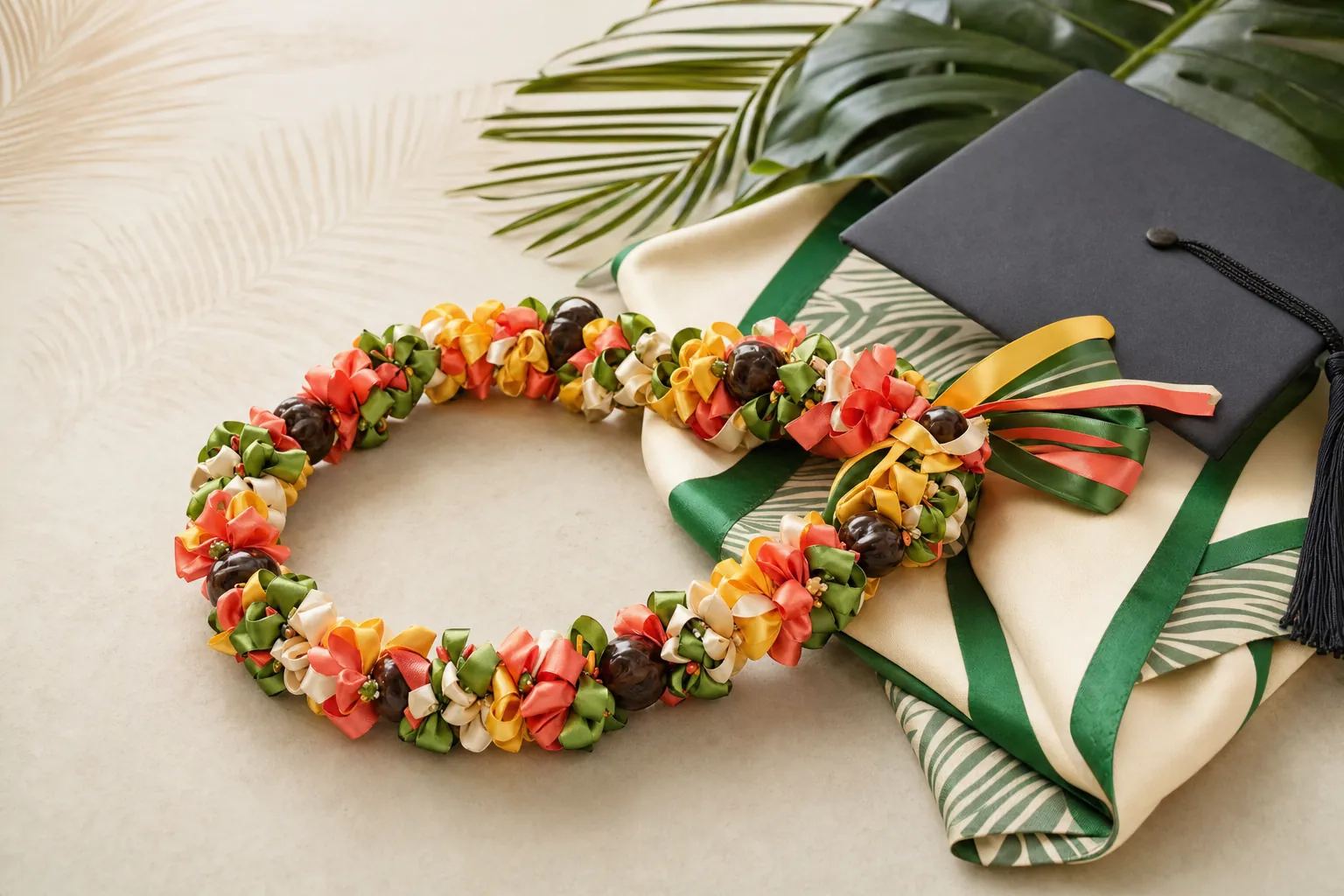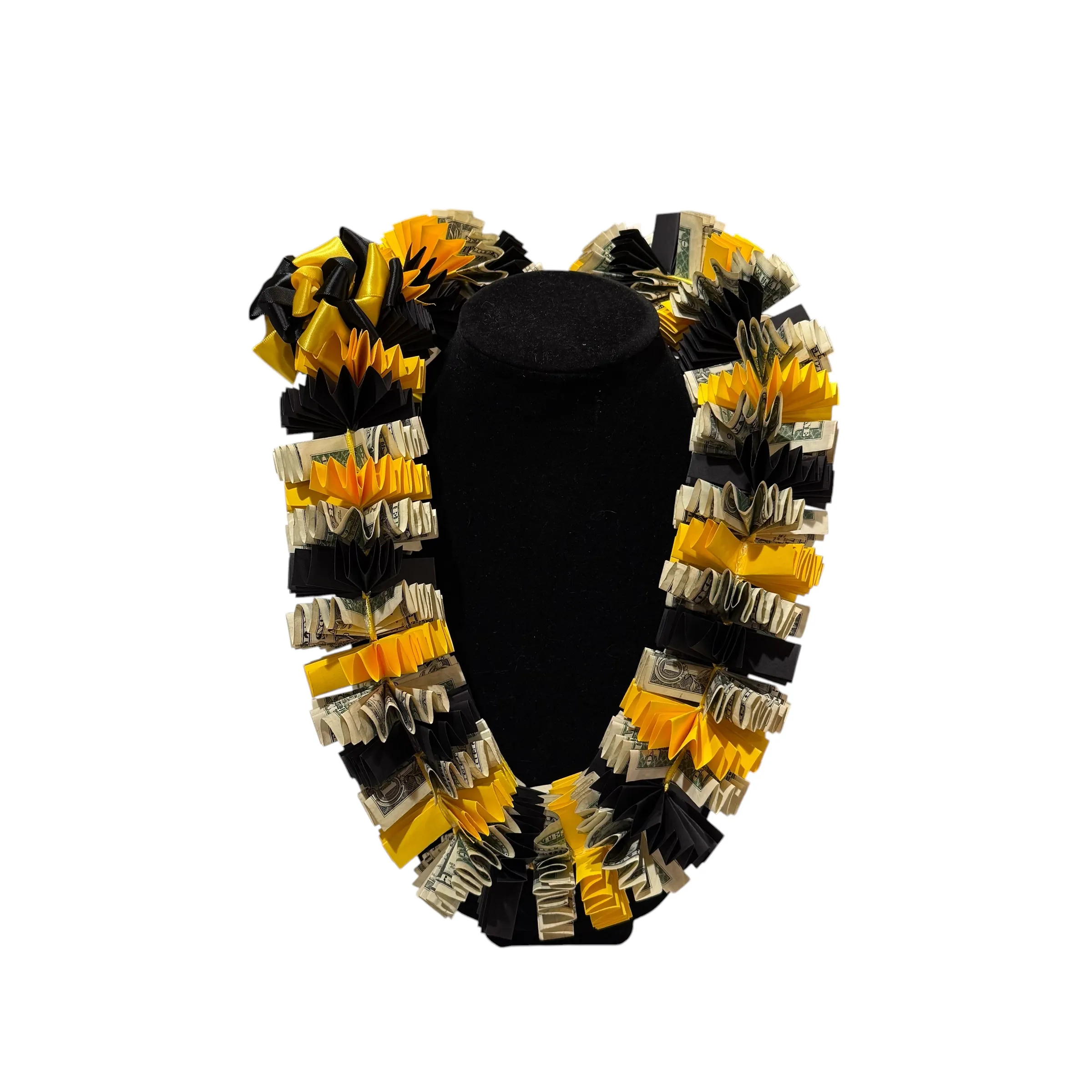

A money lei can be a useful gift and a memorable graduation moment at the same time. When you are making one for a guy, the goal is not to follow a “for guys” formula. It is to choose colors, details, and a level of fullness that feel like him. A clean black-and-gold look might be perfect for one graduate. School colors, a favorite team palette, or a bright mixed ribbon design might be exactly right for another.
Start with the person, not a stereotype
The best money lei begins with a few specific details about the graduate. Think about what he will actually enjoy wearing in photos, what colors he chooses for himself, and what kind of celebration he is heading into. A student who loves a bold school-color look may want bright ribbon and a full front section. Someone more understated may prefer one dark base color, a few gold accents, and neatly spaced folds.
It helps to pick one simple direction before buying anything: school pride, favorite colors, a sport or hobby, a future college, or a polished neutral look. That choice makes the rest easier. Instead of adding every possible decoration, you can let the gift amount, bill folds, and ribbon work together around one clear idea.
Keep the occasion in view too. A graduation lei is a gift of congratulations, not a costume. Lei making is a living Hawaiian cultural practice with many materials and forms, as the University of Hawaiʻi’s Hana lei resource explains. Make the presentation thoughtful, give the graduate room to choose how to wear it, and keep the focus on the care behind the gift.
Choose a color plan that will look good in photos
Pick two or three colors, then repeat them. That is enough to make a money lei feel intentional without making it busy. School colors are a natural starting point, especially when the graduate will still be in cap-and-gown photos. A black, navy, forest-green, burgundy, or deep purple base can look sharp with gold, silver, cream, or white accents. If the graduate has a favorite color, let that win over any generic rule.
Before you make the whole lei, place a folded bill next to the ribbon and any paper, bead, or shell-like spacer you plan to use. Look at it from a few feet away. The bill folds should still be visible, and the supporting colors should make the design feel more personal rather than compete for attention. A simple palette also photographs better when the graduate receives other leis, flowers, cords, or medals.
Gather supplies that protect the gift
Set up a clean, flat workspace before you fold anything. You will want crisp bills, a soft base such as ribbon or cord, decorative material that suits the color plan, and a removable way to hold the folds in place. Start with a small amount of material for a test section instead of buying a large mix of unrelated embellishments.
Protect the money as you work. Do not cut, punch, glue, or tape the bills. The point is for the graduate to enjoy the cash after the photos, not spend an hour trying to rescue it from a craft project. Test the fold and attachment on one bill first. It should stay steady when the lei moves but come off cleanly when the celebration is over.
Give yourself enough room to work. A dining table or cleared counter is better than trying to fold bills in a car or on the morning of the ceremony. Keep the bills in a neat stack, separate the finished folds from the ones you have not touched, and set aside any bill that has become creased in a way you do not like. A tidy workspace makes it easier to notice whether the color pattern and spacing are staying consistent.
Think about the finished gift from the graduate’s point of view. He may be wearing a cap and gown, moving from photos to hugs to a meal, or carrying other gifts. A flexible ribbon base and a well-protected presentation box will serve him better than a very heavy piece that only looks good on a table. The goal is a gift that feels generous from the first photo through the trip home.
- Bills: Choose a total gift amount that feels comfortable before deciding how full the lei needs to look.
- Base: Use a ribbon or cord that bends easily and feels comfortable around the neck.
- Accents: Repeat a small group of colors or textures rather than adding every available decoration.
- Container: Have a roomy box, tote, or gift bag ready so the finished folds do not get crushed on the way to graduation.
Make one sample section before committing
Make a short test section with three to five folded bills. Try the fold you plan to repeat, add the ribbon or spacers between the sections, and hold it up the way the graduate would wear it. This small step tells you far more than a photo tutorial can. You will see whether the bills are too crowded, whether the colors work, and whether the piece is starting to feel heavy.
A simple accordion fold is a friendly place to start because it gives the money texture without asking you to master a complicated shape. Fold each bill evenly, pinch the center, and build a repeated rhythm. If you want more visual variety, use a slightly larger fold at the center front and keep the sides simpler. The front gets the attention in photos, while the rest of the lei should support it comfortably.
If you need help planning the amount before you begin, use this guide to how many bills work well in a money lei. It walks through the tradeoff between a fuller look, a lighter feel, and the total cash gift.
Choose folds for clarity, not complexity
There is no prize for the most complicated money fold. A clean repeated fold can look more polished than a dozen tiny shapes that disappear once the lei is around someone’s shoulders. If you are new to this, choose one fold that you can repeat neatly, then use ribbon spacing and color to make it feel special. The graduated result will read clearly in photos, and you will have more time to enjoy the celebration instead of repairing fussy details.
Use the same gentle pressure on every fold. A bill that is creased sharply in one section and loose in the next can make the lei look uneven. Work slowly, place completed pieces to the side in order, and compare the left and right sides as you go. If a bill does not look right, unfold it and start that one again. A few careful corrections early are easier than trying to disguise a lopsided section at the end.
When the lei will be photographed outdoors, a little extra contrast helps. Pair light bills with a deeper ribbon or choose a medium-to-dark accent that separates the folds from a pale graduation gown. Keep the design easy to read from a few feet away, which is where most family photos will be taken.
Build from the center so both sides stay balanced
Find the center of your base and place the most detailed section there. Then work outward in pairs: add one bill fold or accent to the left, then a comparable one to the right. You do not need every fold to be identical, but the weight and visual fullness should feel steady when the lei hangs.
Pause every few sections and lift the piece gently. If one side drops lower, fix it now by changing the spacing or swapping a heavier accent. Leaving the back lighter is a smart move, especially for a graduate who will already be wearing a gown, stole, cords, or more than one lei. It also puts the attention where it belongs, across the front and sides in the photos.
Add one personal detail, then stop
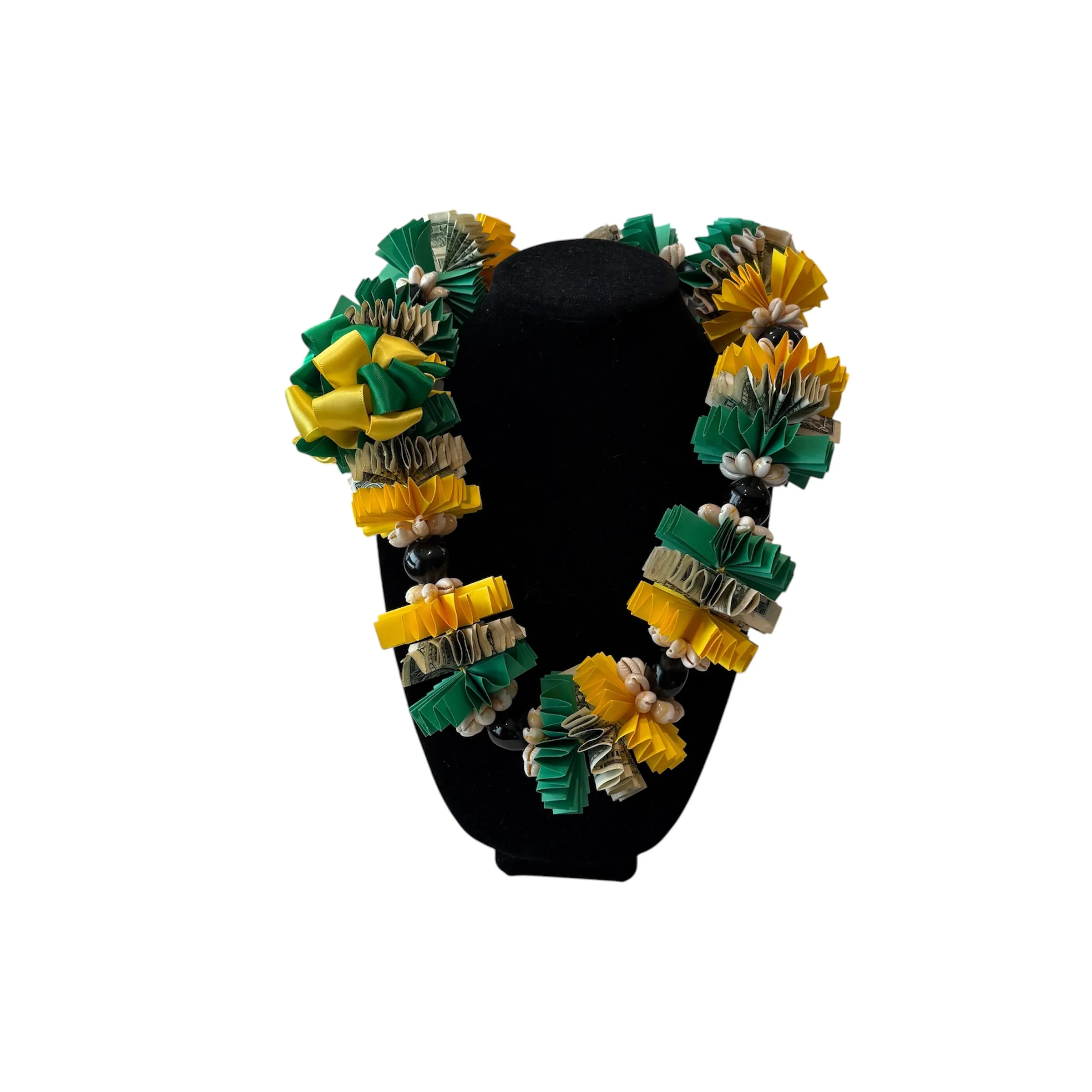
A personal detail can make the lei feel unmistakably his. It might be school colors, a small graduation charm, a favorite-color ribbon, a note tucked safely into the presentation, or a card with a specific message. You do not need all of those. One accurate detail is stronger than a crowded design built around assumptions about what a young man should like.
Keep anything heavy, sharp, or fragile out of the wearable part of the lei. If you want to include a small keepsake, consider attaching it to the gift bag, card, or box instead. The graduate should be able to hug people, move through a crowd, and adjust the lei easily without worrying about a dangling detail catching on a gown.
Plan the handoff for after the ceremony
Graduation rules vary. The University of Hawaiʻi at Mānoa’s commencement instructions, for example, say that flower lei are traditionally presented after the ceremony, when guests meet graduates for a lei reception. Check the school’s own instructions before you decide when the money lei will be worn. Presenting it after the ceremony usually gives the graduate more freedom to enjoy the moment, put it on comfortably, and take pictures without navigating seating or dress-code rules.
Carry the lei in a roomy container, not a tight gift bag. When you see the graduate, take a moment to hand it over, help them put it on if they want, and let them adjust it before photos. If several people have gifts, keep the money lei easy to remove or hold between picture groups. Comfort makes the memory better.
When a made-to-order money gift is the better call
A DIY money lei can be a lovely family project, but it asks for time and patience in the busiest week of graduation. If you want the personal effect without the late-night folding, a made-to-order piece can take the pressure off. AlohaKitashima creates handmade graduation money leis with colors and details chosen for the graduate, and the money gifts collection shows other ways to turn a practical cash gift into a meaningful presentation.
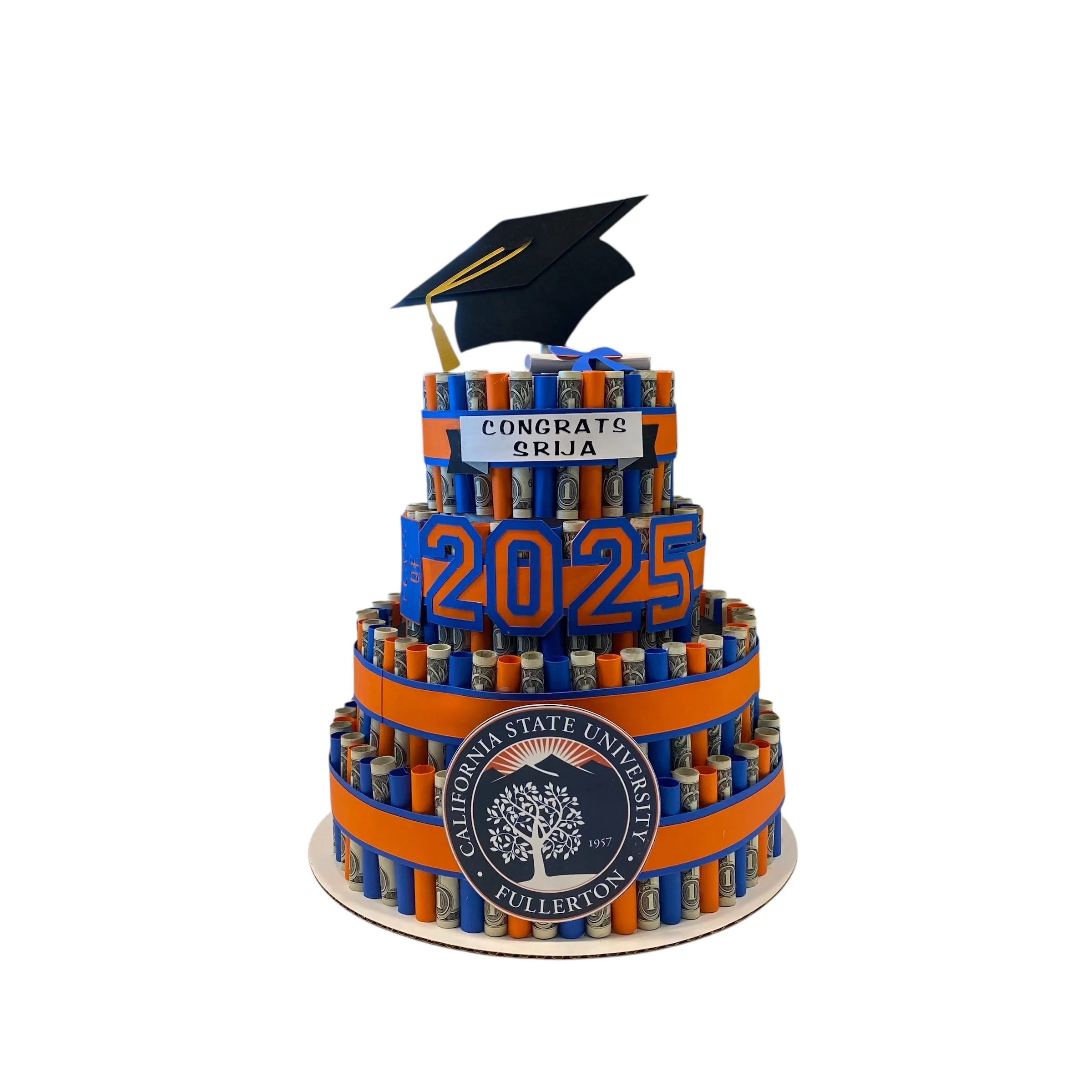
For a party table or a larger reveal, a graduation money cake may make more sense than a wearable lei. It keeps the cash gift at the center of the celebration while giving the graduate something easier to display before it is opened.
A simple money-lei checklist
- Choose the gift amount first.
- Use the graduate’s real preferences to guide the colors and style.
- Test one short section before folding every bill.
- Build outward from the center in balanced pairs.
- Keep the back lighter for comfort.
- Use only removable attachments that do not damage the bills.
- Bring the finished lei in a roomy container and check the school’s ceremony guidance.
For another step-by-step view of the folding and assembly process, read how to make a money lei for graduation. The best version is the one that fits the graduate, feels good to wear, and lets the gift say what you want it to say: we are proud of you.
Frequently asked questions
What colors work well for a money lei for a guy?
Start with colors he already likes, the school colors, or a combination that fits the celebration. Black, navy, green, burgundy, gold, silver, and neutral accents can all work, but there is no required palette. The most personal choice is usually the best one.
How many bills should I use for a money lei?
Many wearable money leis begin with roughly 20 to 40 bills, then use ribbon or other details to control the fullness. The right number depends on the gift amount, the fold size, and how light you want the lei to feel around the graduate’s neck.
Can I make a money lei without damaging the bills?
Yes. Use a removable way to hold the folded bills in place, and test it on one section first. Do not cut, punch, glue, or tape the bills. The graduate should be able to take the cash out after the celebration without a struggle.
When should I give a graduation money lei?
After the ceremony is usually the easiest time. The graduate can put it on for photos without worrying about venue rules, assigned seating, or wearing too many items during the formal program. Check the school’s instructions before the day.